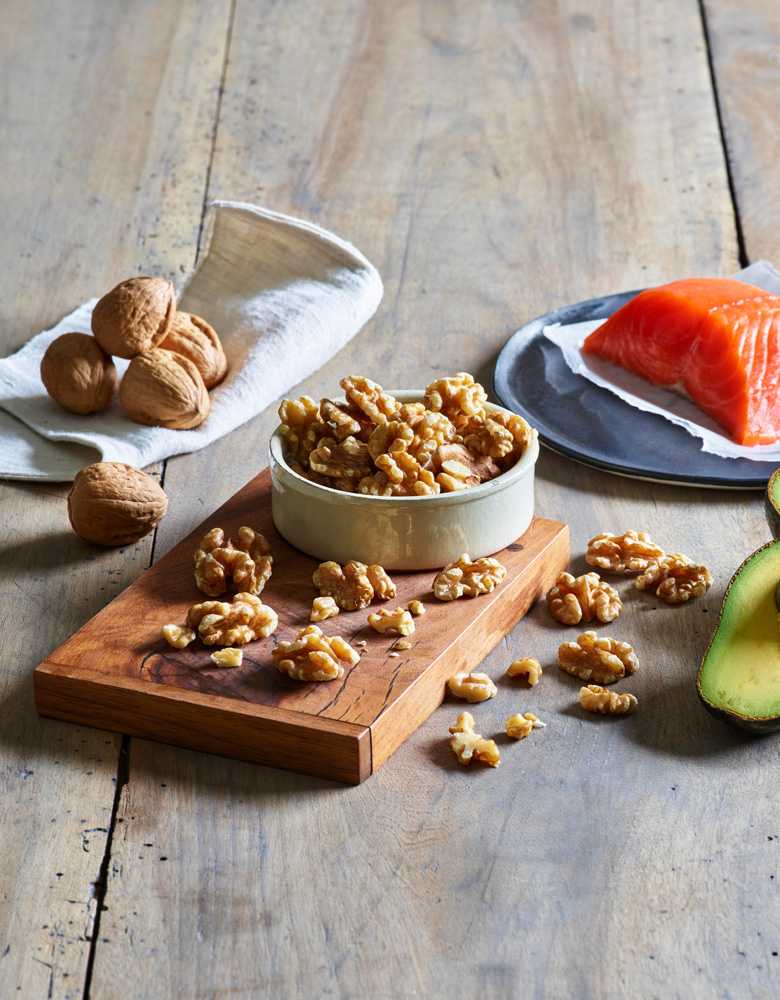
New studies show: Walnuts as a source of omega‑3 support brain development in children and adolescents
Two recent studies highlight once again the important role of maternal nutrition during pregnancy for children’s cognitive development – and suggest that this association may extend well beyond early childhood into adolescence.
In a population‑based cohort study published in the American Journal of Clinical Nutrition, researchers found that higher consumption of nuts and fish during pregnancy was associated with improved neuropsychological function in children aged 4 to 15 years. A complementary study published in European Child & Adolescent Psychiatry additionally showed that children aged 11 were less likely to engage in impulsive or risk‑taking decision‑making when their mothers regularly consumed nuts and fish during pregnancy.
Scientific background
The studies analysed data from more than 1,700 mother–child pairs from four regions in Spain. Maternal diet during pregnancy was assessed using a food‑frequency questionnaire, while children’s cognitive performance and attentional capacity were evaluated using standardised neuropsychological tests – including measures of reaction time, working memory and fluid intelligence.
Key findings
- Children whose mothers had a high intake of nuts and fish during pregnancy consistently achieved better results in tests of attention, working memory and executive control – from early childhood through to adolescence.
- These children were also less prone to impulsive or risky behaviour in early puberty.
Role of omega-3 fatty acids and walnuts
Omega‑3 fatty acids were identified as key nutrients in the studies, as they are found in significant amounts in fatty fish and walnuts. Among tree nuts, walnuts are unique in that they represent a substantial plant‑based source of the omega‑3 fatty acid alpha‑linolenic acid (ALA), providing around 2.7 grams per 28‑gram serving. Although neither of the studies focused exclusively on walnuts, both underline the importance of nutrient‑dense foods such as nuts as part of a balanced prenatal diet.
References
- Pinar‑Martí A. et al. (2025): Maternal prenatal nut and seafood consumption and child neuropsychological function from 4 to 15 years of age. American Journal of Clinical Nutrition.
- Rivera M. R. et al. (2025): Maternal nut and fish consumption during pregnancy and child risky decision‑making at 11 years old. European Child & Adolescent Psychiatry.